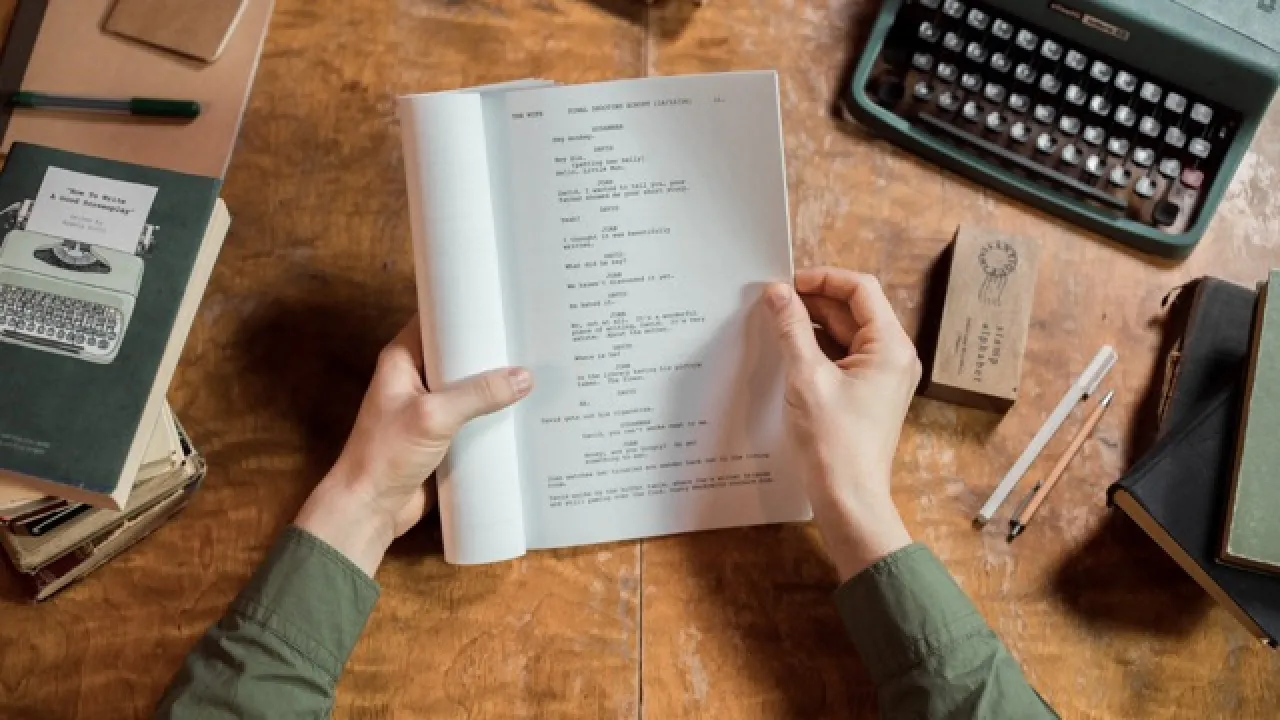
A logline is a brief one or two sentence summary that captures the essence of a story, such as a screenplay, documentary, or TV show. It is designed to convey the main conflict, protagonist, and stakes in a way that interests producers, distributors, or viewers.
How Long Should a Logline Be?
Loglines are typically 25 to 30 words long. The goal is to be as concise as possible while still giving a clear snapshot of the core elements of the story.
When to Use a Logline
Pitching to Producers
Imagine you are in an elevator with a potential producer and have 30 seconds to make an impression. Your logline is one of your strongest tools because it can quickly grab attention and make them want to hear more.
Screenwriting Competitions
Most screenwriting contests ask for a logline. A strong one can help your script stand out in a crowded field of submissions.
Networking
Whether you are at a film festival or having a casual coffee meeting, you will often need to explain your project quickly. A polished logline helps you do that clearly and confidently.
Marketing
Think of a logline as a bite-sized trailer. It can be used in posters, social media, or promotional material to give audiences a quick sense of what your film is about.
Logline Formula
A common logline formula is:
When [inciting event] occurs, a [character trait] protagonist must [dynamic action] to overcome [obstacle].
When [inciting event] occurs
This sets the story in motion. It introduces the event that disrupts the protagonist’s world.
A [character trait] protagonist
This gives a snapshot of the main character. It could be something like a cynical detective or a naive young artist.
Must [dynamic action]
This shows what the protagonist has to do. It should feel active and urgent.
To overcome [obstacle]
This introduces the barrier in the way. It creates tension and gives the story stakes.
Example: “When a killer shark threatens a beach community, a fearful police chief must face his fears to protect the town.”
Logline Formula Types
Each type of formula suits different kinds of stories. Choosing the right one can help you express your project more clearly and more effectively.
Basic Logline Formula
This is the most direct and straightforward version. It includes the main character, what they want, and what stands in their way.
Structure: [Protagonist] must [Objective] or else [Stakes].
Example: “In a future society, a young man must pass a series of grueling tests or else be relegated to a life of menial labor.”
Character Logline Formula
This version places more emphasis on the character traits of the protagonist. It works well when the emotional or psychological journey matters as much as the external plot.
Structure: A [Character Trait] [Protagonist] has to [Objective] in the face of [Obstacle] to achieve [Emotional Goal].
Example: “A timid librarian must confront her deepest fears when she becomes the target of a mysterious stalker, forcing her to take charge and fight back to reclaim her life.”
Save the Cat Logline Formula
Inspired by Blake Snyder’s Save the Cat, this formula hints at how the story may resolve or what the protagonist may learn.
Structure: [Situation] forces a [Specific Character Trait] [Protagonist] to [Objective], only to discover [Resolution or Twist].
Example: “A high-profile court case forces a morally ambiguous lawyer to fight for an innocent defendant, only to discover the true meaning of justice.”
Conflict Logline Formula
This formula highlights urgency and tension. It puts the stakes front and centre.
Structure: When [Inciting Event], a [Character Trait] [Protagonist] must [Dynamic Action] to [Resolution] before [Time Limit or Dire Consequence].
Example: “When an ancient artifact is stolen, a relentless archaeologist must decode a series of riddles to retrieve it before it falls into the hands of a dangerous cult.”
Logline Attributes
Character traits and dynamic actions can greatly strengthen a logline. These elements help make it more vivid, memorable, and specific.
Character Traits
Character traits describe what makes the protagonist distinctive. These should be specific enough to make the character interesting, while still leaving room for imagination. Common examples include fearless, insecure, ambitious, compassionate, or ruthless.
Dynamic Actions
Dynamic actions describe what the protagonist actually does in pursuit of their goal. These can be physical, such as fighting, escaping, or building, or emotional, such as reconciling, forgiving, or overcoming fear.
Logline Tips
- Keep it short. Say as much as possible in as few words as possible.
- Focus on the protagonist. Make clear who the story follows.
- Include the conflict. The conflict is the engine of the story.
- Be specific. Vague wording weakens the impact.
- Convey the tone. The logline should reflect the kind of film it is.
- Stay honest. Do not oversell or misrepresent the story.
- Test it out. Share it with others and see how they respond.
- Revise it. A logline often improves through rewriting.
- Stay passionate. Your excitement about the project should come through.
Logline FAQ
A logline is a concise summary of the plot and characters, usually in no more than 30 words. A tagline is a short marketing phrase, often under 8 words, used on posters or promotional materials to capture the spirit of the film without explaining the plot.
A logline is a one or two sentence summary of the story’s essence. A plotline is a more detailed account of the story’s events. Think of the logline as the elevator pitch and the plotline as the fuller explanation.
A logline is a one sentence summary designed to quickly grab attention. A synopsis is a more detailed overview of the plot, characters, and often the ending. One entices, the other informs.
A good logline is concise, clear, and compelling. It introduces the protagonist, presents the main conflict, and hints at the stakes.
Focus on four key elements: the protagonist, their goal, the antagonist or obstacle, and the stakes. Combine them in a way that feels clear and engaging.
The four main elements are the protagonist, the goal, the antagonist or obstacle, and the stakes.
A 27-word logline is an exercise in brevity. It challenges you to include the essential story elements within a very tight word count.
Yes. A logline is a hook. Its purpose is to capture attention quickly and make someone want to know more.
It is a form of summary, but not a full one. A logline captures the essence of the story, while a full summary gives more detail.
Yes. A logline often appears on the cover or title page of a script and helps frame the project for the reader.
Conclusion
Mastering the art of the logline is not just about summarising your story. It is about presenting it in a way that opens interest and creates momentum. A strong logline can help your project connect with producers, agents, distributors, and audiences from the very first sentence.
Titanic
When a luxury ship hits an iceberg, a penniless artist must find a way to survive the sinking vessel and freezing waters.
Not Without My Daughter
When her husband is taken hostage, a determined wife must navigate political intrigue and danger to overcome a vengeful dictator’s demands.
Taken
When his daughter is kidnapped during a vacation in France, a former CIA operative must rely on his old skills to overcome a human trafficking ring.
Sleeping Beauty
When an evil fairy curses a newborn princess, a young and unsure fairy godmother must find a cure to break the spell and save the kingdom.
The Fugitive
When he is falsely accused of treason, a skilled military officer must uncover the conspiracy against him to clear his name.