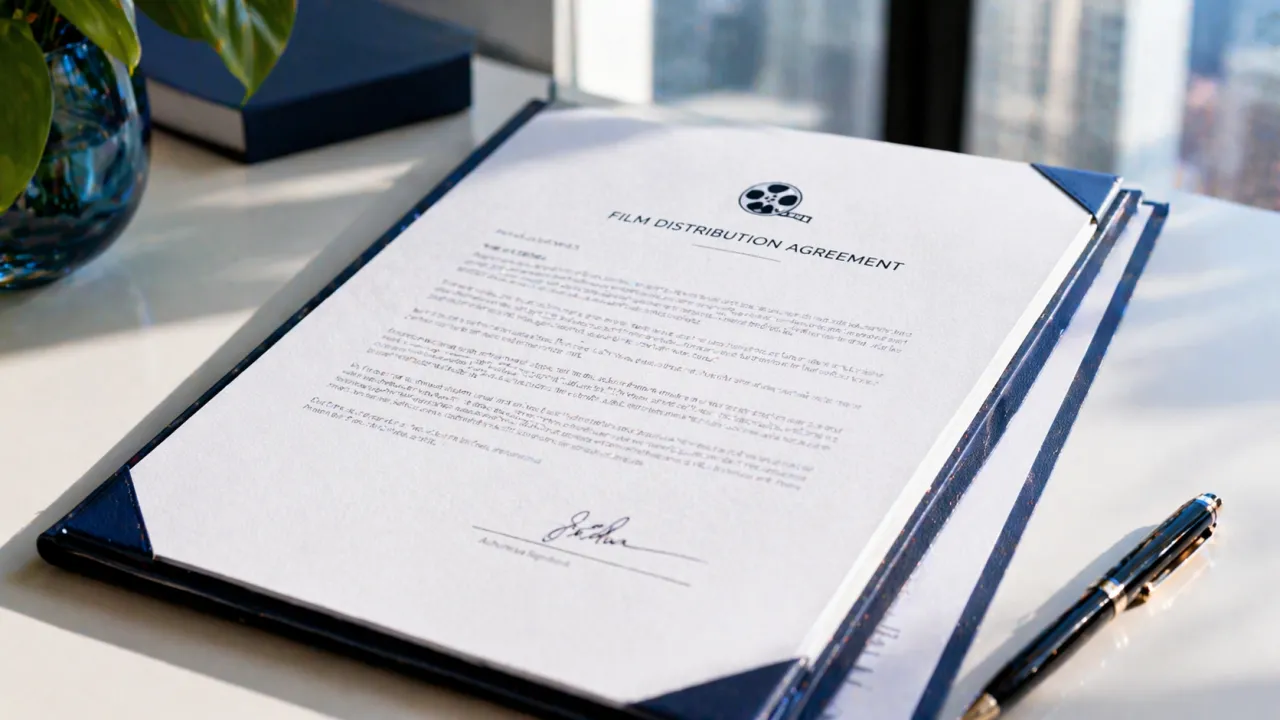
A negative pick-up deal is when a distributor agrees to buy the finished film for a fixed price before production begins. The payment comes after delivery, but the contract can be used earlier to help finance the film.
A negative pick-up deal can be useful when a film already has enough market value for a distributor to commit before it is made. The distributor is not financing production directly. Instead, it is promising to acquire the completed film later at an agreed price.
That matters because the agreement can help the producer raise money in advance. A lender or investor may treat the contract as future income already tied to the project, which makes the finance plan stronger.
This article explains how negative pick-up deals work, when they make sense, and what needs to be in place before a distributor will make that kind of commitment.
What you need to know
- A negative pick-up is a future purchase commitment, not upfront production funding.
- The distributor agrees to pay once the film is delivered and accepted.
- The contract can help producers raise loans or other financing before completion.
- The strongest projects usually have clear market value before production.
- The deal depends on package strength, delivery confidence, and audience potential.
What is a negative pick-up deal?
A negative pick-up deal is an agreement in which a distributor commits to buy the film for a fixed price once it has been completed and delivered according to the contract.
The distributor is effectively saying that, if the producer delivers the film as agreed, the distributor will acquire it for that amount. That gives the project a piece of future income that may already be usable inside the finance structure.
This is why negative pick-up deals often sit somewhere between distribution and financing. They are sales agreements, but they can also help the producer unlock the money needed to make the film.
Who is it best for?
This works best for films that a distributor can understand and price early.
- Films with clear commercial or distribution potential
- Projects with recognizable cast, director, or concept
- Productions with strong genre or audience logic
- Films working with established producers or sales agents
The stronger the package, the easier it becomes for a distributor to commit before the film is finished.
Why does it matter?
A negative pick-up deal matters because it can add certainty to the finance plan without requiring the distributor to put cash into production immediately.
For the producer, that commitment may help attract lenders, investors, or gap financiers who want to see that part of the film’s future revenue is already contractually defined.
For the distributor, it allows them to secure the film early while still paying on delivery rather than taking full production risk from day one.
How does it work?
A distributor reviews the package and agrees a fixed purchase price for the completed film. That price is tied to delivery, acceptance, and the conditions set out in the contract.
The producer then uses that signed agreement inside the wider finance plan. Depending on the rest of the structure, the contract may help support loans, investment, or other production financing.
Once the film is completed and delivered in line with the deal, the distributor pays the agreed amount.
When is it worth pursuing?
It is worth pursuing when the film has enough market value to support an early acquisition commitment and when that commitment would materially help close the budget.
- When the package is strong enough for a distributor to price
- When the film has recognisable sales logic
- When the production needs contractual future income to support financing
- When delivery confidence is high enough for a distributor to commit in advance
If the project is still too uncertain, too unstructured, or too difficult to position, a negative pick-up is much harder to secure.
What needs to be in place?
- A strong package including script, director, and cast
- Clear market positioning and audience
- Access to distributors or sales agents
- A finance plan showing how the deal supports the budget
- A legal structure for the agreement
The stronger the package and the clearer the route to delivery, the easier it becomes to negotiate a useful commitment.
A negative pick-up deal works when a distributor is willing to commit to the completed film early enough for that promise to help finance production. It is strongest on projects with a clear market case, a credible package, and a production plan that gives the distributor confidence in delivery.
A negative pick-up deal becomes useful when the distributor’s commitment can do real work inside the finance plan. The value is not only that a distributor wants the film. The value is that the agreement gives the producer a fixed future sale that can help unlock production financing now.
That means the practical question is not only how to secure the deal. It is how to use that deal to support borrowing, strengthen investor confidence, and help close the budget.
In practice, negative pick-up deals are most useful when the film already has a strong package, a realistic delivery path, and a finance plan that can absorb the contract properly.
1. Use the distributor commitment to raise financing
The first use of a negative pick-up deal is simple. It gives the project a defined amount of future income that can be shown to lenders or investors as part of the financing structure.
This usually helps because:
- part of the film’s value is already contractually agreed
- the distributor has committed to the project before production
- the finance plan relies on more than projections alone
Typical use: A producer secures a distributor agreement with a fixed purchase price, then presents that contract to lenders or investors as part of the finance package.
2. Work with a sales agent or market-facing producer to secure the deal
These deals usually come through sales agents, experienced producers, distributor relationships, and industry markets. The project needs to reach buyers through people who already know how to position it commercially.
Common routes include:
- sales agents with relevant buyer relationships
- distributors already active in the genre or audience space
- producer relationships and previous buyer contacts
- festival markets and industry meetings
- executive producers, attorneys, and finance advisors
Typical use: A sales agent takes the film to distributors, negotiates terms, and helps secure a fixed-price commitment before production starts.
3. Combine the pick-up with other finance layers
A negative pick-up rarely stands alone. It usually works best alongside equity, incentives, grants, pre-sales, or gap finance. Its role is to strengthen the overall structure, not carry the whole budget by itself.
A strong finance picture usually shows:
- the agreed pick-up amount
- how much of the budget it supports
- which other finance layers sit around it
- what still needs to be raised
Typical use: A production already has equity and incentives in place, and the negative pick-up adds another reliable layer that helps complete the budget.
4. Use the contract to support gap financing or lending
One of the main practical uses of a negative pick-up deal is that it can support borrowing. A lender may be more comfortable advancing money when part of the film’s future revenue is already fixed by contract.
This usually works best when:
- the distributor is credible
- the contract terms are clear
- delivery conditions are realistic
- the wider finance plan is already solid
Typical use: The producer uses the signed negative pick-up agreement as part of a loan request, helping bridge the remaining finance gap and move the film into production.
5. Build the budget and delivery plan around the agreement
The deal only turns into money when the film is delivered properly. That means the production plan has to support the delivery terms in a serious and controlled way.
Useful things to show include:
- a realistic production schedule
- clear rights and chain of title
- experienced production management
- delivery planning and technical readiness
- completion security where needed
Typical use: A production uses the agreed purchase price as one anchor inside the budget, then builds the schedule, delivery plan, and financing structure around that commitment so payment can be triggered smoothly on completion.
What usually makes a negative pick-up more useful?
- a distributor with real market credibility
- a package that is easy to price and position
- clear delivery conditions
- a finance plan that shows how the deal fits into the budget
- other finance already structured around it
The strongest negative pick-up deals support a wider finance plan that is already clear and well organized. The more clearly the distributor commitment strengthens borrowing, investor confidence, and budget completion, the more useful it becomes.
A negative pick-up deal is most useful when it can be turned into real financing value before the film is delivered. The clearer the package, the stronger the distributor, and the better the structure around the deal, the more effectively it helps move the film into production.